Positive Behaviour for Learning
Building a safe, supportive and disciplined learning environment through mutual respect and positive relationships
Overview
We believe that mutual respect, built on a foundation of positive relationships, is key for providing a safe, supportive and disciplined learning environment that is essential for effective teaching and learning to take place.
The Positive Behaviour for Learning (PBL) framework provides a whole school evidence-based approach to behaviour support. PBL takes an instructional approach to behaviour, recognising that we need to explicitly teach the behaviours needed for success at school and beyond.
Our whole school PBL expectations are:
Classroom PBL
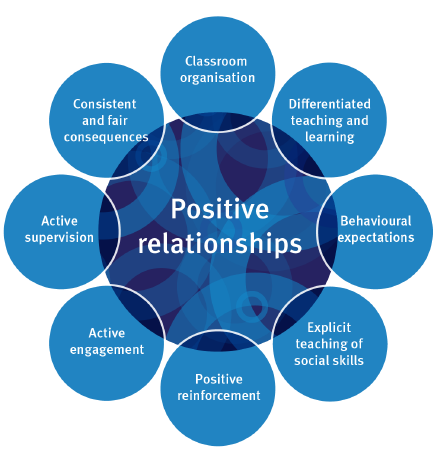
The whole school PBL framework provides the foundations for Classroom PBL, the consistent implementation of proactive, research-informed practices for classroom management, which is critical to the provision of a safe and supportive learning environment, and helps build positive relationships.
Research has consistently demonstrated the relationship between effective classroom management and both academic achievement, and teacher and student wellbeing.
Components of effective classroom management
Research demonstrates the following components reduce rates of problem behaviour and increase student engagement with learning:
Predictable Learning Environment
Clear routines, consistent expectations and structured classroom settings
Positive Climate
Building respectful relationships and celebrating positive behaviour
Quality Teaching
Engaging lessons, differentiated instruction and active student participation
Explicitly Taught Expectations
Teaching, modelling and practicing expected behaviours
Active Supervision
Moving, scanning and interacting to prevent and respond to behaviour
Continuum of Strategies
Range of responses from preventative to corrective approaches
The PBL Matrix
The PBL Matrix provides an overview of what these expectations mean in each of seven different settings across our school.
The matrix outlines specific behavioural expectations for settings including classrooms, corridors, playground areas, assemblies, and other common spaces throughout the school.
Student Code of Conduct
These values have been used in the development of our Student Code of Conduct, with the aim of helping shape and build the skills of all our students to be confident, self-disciplined and kind young people. Our school staff believe that communication and positive connections with other people are the most valuable skills our communities need now and in the future.
Our educative approach
Coombabah State High School staff take an educative approach to discipline, that behaviour can be taught and that mistakes are opportunities for everyone to learn.
What the Code of Conduct covers
Our Student Code of Conduct provides a comprehensive overview of:
- School policies on the use of mobile phones and other technology
- Procedures for the removal of student property
- Our approach to preventing and addressing incidents of bullying
- How students are explicitly taught expected behaviours
- Steps school staff take to educate students about policies
- Consequences that may apply when students breach expected standards, including the use of suspension or exclusion
Questions about PBL?
Contact our Deputy Principals or Student Services team for more information about our Positive Behaviour for Learning framework and how we support student success.